Your operation needs consistent cleaning schedules customized for unique hazards, daily throughput, allergen management, and inspection schedules, with verifiable documentation confirming HACCP requirements, inspection compliance, and public health regulations. The information following provide guidance on sanitation program requirements.
Main Points
- Brampton's sanitation professionals provide services to restaurants, grocery departments, commissaries, warehouses, bakeries, schools, mobile vendors, and allergen-sensitive operations.
- Cross-contamination reduction is ensured by disinfecting high-touch surfaces, food-contact equipment, kitchens, floors, drains, restrooms, and storage areas with sectional methods.
- Validation of approved sanitizer dilution, alignment, and contact time is performed by qualified contractors, with conclusion documented using tests, assessments, and action records.
- Routine, recurring, and annual tasks distributed by section comprise hygiene schedules founded on threat, output capacity, switches, incidents, and regulations.
- Contractors must possess hazard analysis knowledge, sanitation expertise, safety training preparation, liability, credentials, color-categorized equipment, and assessment-ready hygiene paperwork.
Brampton Operations That Need Food Safety Cleaning: Which Ones?
Any Brampton facility that manages, stores, prepares, packages, or serves food needs food sanitation. You must use it if your business falls under public health review, food rules, or HACCP systems. That requirement covers restaurants, cafeterias, commissaries, grocery food departments, butcher shops, seafood counters, convenience stores, and institutional kitchens.
You'll also need proper hygiene protocols in supply facilities, manufacturing operations, cold storage warehouses, bakeries, school food programs, reception halls, and delivery services. Seasonal and mobile ventures apply too, examples being food trucks, event sellers, and temporary stalls. Should your team work with ingredients, section ready-to-serve foods, heat meals, or keep allergens stored, your establishment requires recorded sanitation procedures. In Brampton, hygiene stays mandatory; it represents legal, operational, and consumer protection compliance.
Which Areas Do Brampton Cleaning Experts Cover?
You require experienced cleaning professionals who sanitize frequently touched areas, kitchen spaces, flooring, and bathrooms to maintain food safety and public health requirements. These locations are prioritized due to their high cross-contamination potential, slip and fall dangers, and regulatory breaches.
By knowing exactly what gets cleaned, you can make sure your facility's cleaning procedures meet compliance standards.
High-Touch Surface Cleaning
assign how periodically each surface is disinfected
if findings fall below target ranges. They also prevent secondary contamination through swapping wipes, following one-way workflows
Kitchen Areas, Floor Surfaces, and Bathroom Spaces
Professional cleaners in Brampton concentrate on kitchens, floors, and restrooms given that each location involves specific contamination control, slip-and-fall, and public health requirements. In industrial kitchens, you need grease removal from cooking stations, appliance surfaces, drain systems, preparation areas, and backsplashes to reduce contamination and pest pressure.
You should also expect documented flooring maintenance. is also provided as part of the service.
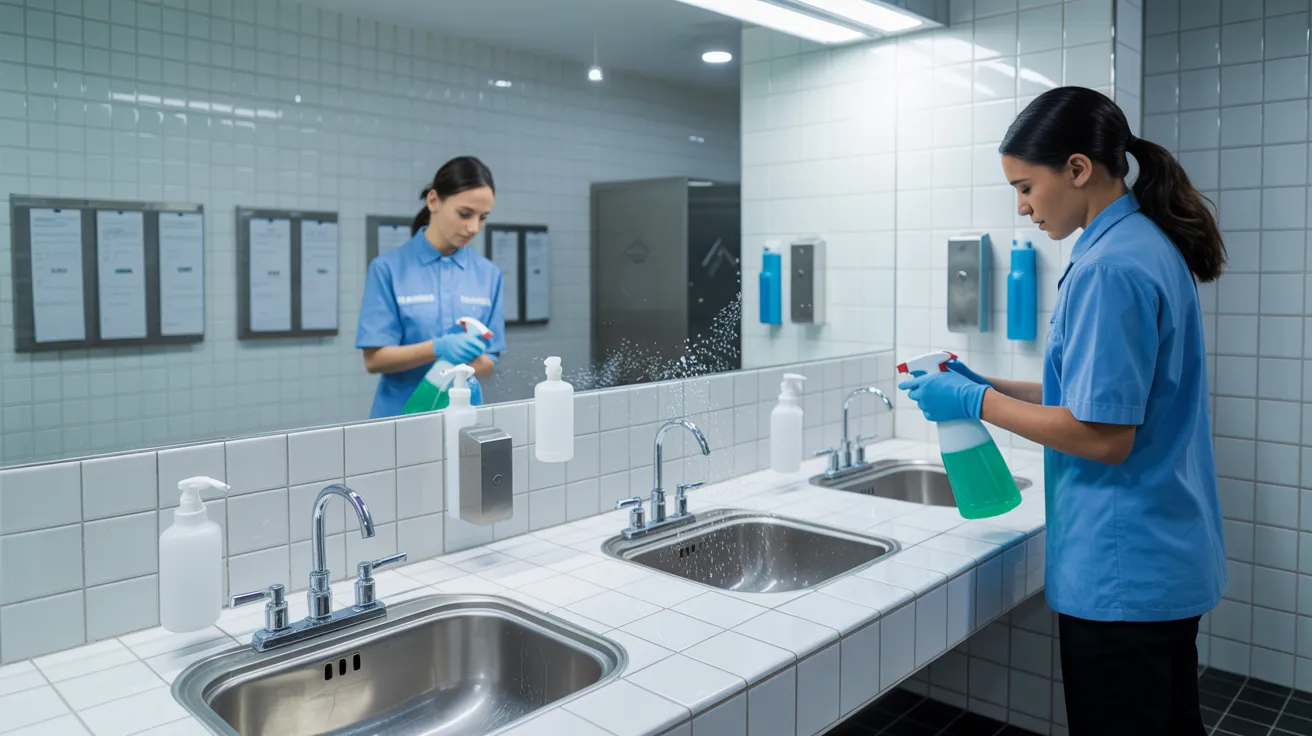
Restroom sanitation requires disinfecting touch areas, bathroom equipment, stall barriers, supply stations, and bins, replacing items and managing smells. They also service restaurant moprooms, where chemical storage, sink hygiene, and drainage conditions can affect sanitation compliance and staff safety daily.
The Importance of Food Safety Cleaning in Brampton
To comply with regulatory mandates and pass inspections, Brampton establishments must follow food-safe cleaning standards. You also reduce bacterial spread through proper cleaning of food-preparation surfaces, appliances, and frequently-touched items. Most importantly, you help protect public health by lowering the risk of foodborne illness in your facility.
Regulatory Code Requirements
Brampton food companies must comply with mandatory safety protocols, so hygiene maintenance is essential to adhering to health codes, safeguarding customers, and preventing penalties. You must maintain clean food preparation areas, recorded sanitation plans, safe chemical management, and verifiable staff procedures that comply with municipal and provincial inspection expectations.
Inspectors examine your operation to verify that your sanitation system maintains protected inventory management, tool sterilization, refuse management, and facility cleanliness.
Cross-Contamination Prevention
Meeting regulatory requirements also depends on your ability to prevent cross-contamination during daily food handling and cleaning. You must separate raw ingredients from ready-to-eat foods, sanitize prep surfaces between tasks, and keep cleaning products separate from food areas. Clear procedures reduce transfer risks and ensure ongoing adherence to health checks.
Building allergen segregation prevents priority allergens from contacting shared surfaces, containers, or equipment. Utilize dedicated cutting boards, color-coded tools, and precise instrument labeling so staff don't mix items in cooking or serving.Mandate hand cleaning following raw meat, seafood, eggs, or allergen-containing products. Swap wiping cloths regularly, and confirm sanitizer strength with test strips. When you train staff to follow these controls every shift, you create a cleaner, safer operation that exceeds Brampton's safety standards daily.
Community Health Safety
Should cleaning standards collapse, you don't simply risk a failed inspection—you increase the potential of foodborne illness harming customers, staff, and the wider Brampton community. You also weaken your role in safeguarding community wellness, especially in high-traffic food premises where contamination can spread quickly through surfaces, equipment, and touchpoints.
You require cleaning procedures that remove contaminants, disinfect correctly, and verify outcomes. This requires following exposure times, employing authorized sanitizers, logging schedules, and training employees to meet regulatory standards. These controls promote disease prevention by limiting pathogens before contaminating food or surfaces. Across Brampton, effective sanitation safeguards vulnerable groups, limits outbreak risk, and shows your diligence. When check this resource you maintain proper protocols, you go beyond requirements—you substantially lower hazards and facilitate secure food handling city-wide.
How Does Cleaning Support Food Safety Compliance?
Committing to rigorous cleaning routines solidifies food safety compliance by reducing contamination risks, controlling pathogen growth, and ensuring your facility complies with sanitation requirements under HACCP-based programs and public health regulations. You verify that product-contact areas appear visibly clean and microbiologically controlled, supporting documented preventive controls and inspection readiness.
Cleaning efforts additionally upgrade allergen control by clearing residues that can lead to undeclared allergen exposure.
When Should You Schedule Commercial Cleaning?
maintenance activities.
risk factors, production volumes, or regulatory requirements shift
Finding Quality Brampton Cleaning Experts: A Guide
Start by screening providers against food sanitation standards, not cost only. You should verify that each company understands CFIA, public health, and HACCP compliance standards relevant to your facility. Ask for insurance documentation, WHMIS compliance, documented staff training, and supervision practices. Review whether technicians understand cross-contamination risks, chemical handling, and traceable sanitation records.
You should further examine operational reliability and accountability. Request references from food facilities in Brampton, then review response times, corrective-action procedures, and communication protocols. Validate the company facilitates supplier audits and can supply compliance documentation to authorities or third parties. Confirm equipment receives maintenance, color-coded implements are used appropriately, and facility-specific risks are identified. A qualified provider protects compliance, product integrity, and your brand reputation.
Which elements are contained in a hygiene cleaning program?
Establish a documented program that clarifies every sanitation task, standard, and responsibility before production begins. You should list cleaning intervals, permitted substances, dilution percentages, exposure times, instruments, and inspection methods for each sector, surface, and equipment. Make sure to include pre-operational inspections, corrective actions, and employee training requirements.
Your plan should also focus on contamination prevention controls, waste handling procedures, pest management measures, and written schedules for rest areas, drains, flooring, and food-contact surfaces. Describe how you'll keep raw and ready-to-eat processes separate, support ingredient tracking, and maintain accurate allergen labeling through validated cleaning between product changes. You should set accountability, keep signed records, and assess results against regulatory standards, HACCP controls, and customer requirements. When gaps appear, modify procedures immediately and retrain staff.
Regular Asked Inquiries
Will sanitation providers manage overnight shifts at Brampton properties?
If you manage controlled environments, you'll also need documentation that enable inspections and maintain assurance.
Are emergency spill response solutions available from sanitation professionals?
Yes, you can expect Brampton sanitation professionals who offer emergency spill response solutions. They handle contamination, assess risks, contain contamination, and start rapid decontamination to minimize risk and prevent business interruption. You should confirm response times, training certifications, PPE protocols, and disposal procedures. If your facility must comply with industry standards, select a service that documents incidents, follows compliant standards, and supports audit readiness.
Are green disinfectants secure for food-contact surfaces?
Absolutely, plant-based sanitizers are suitable for food preparation areas when you select solutions certified for food use and satisfying regulatory requirements. You must confirm contact times, mixing proportions, and rinse procedures in advance of use. Natural-based solutions minimize toxic chemical contact, though you should gather demonstration of efficacy against harmful bacteria. For preserving residue-free areas, adhere to precise manufacturer instructions and verify your cleaning agent meets food sanitation requirements.
Can cleaning schedules flex with production fluctuations?
Yes, you can tailor cleaning plans for seasonal production changes. You should adapt intervals, personnel, cleaning agents, and validation steps to match production rhythms while upholding regulatory adherence. You'll lower equipment downtime by timing cleaning around equipment transitions, maximum output, and usage patterns. You should additionally update written procedures, instruction programs, and environmental testing to capture periodic risks, new allergens, or higher contamination levels. Regular reviews ensure your plan functional.
Are commercial cleaners offering employee instruction on hygiene protocols?
Certainly, commercial cleaners coach your staff on sanitation best practices. You obtain employee development on correct chemical practices, contact times, contamination control, machine disassembly, and documentation. They generally coordinate coaching with HACCP, GMP, and CFIA or local public health standards. Many execute health assessments to check standards, identify gaps, and reinforce corrective actions. This enables you to copyright standard processes, satisfy audits, and reduce food safety risks daily.
Closing Remarks
Partnering with Brampton commercial cleaning and food safety professionals means more than cleaning—it ensures your facility stays inspection-compliant and your protocols are defensible. From processing facilities to kitchens, each cleaned area and organized section reduces health hazards and prevents major expenses. By arranging service on appropriate schedules and executing a comprehensive cleaning strategy, you shield your workforce, your customers, and your image. In a tightly controlled market, sanitary conditions can't be overlooked—they're critical to business success.